
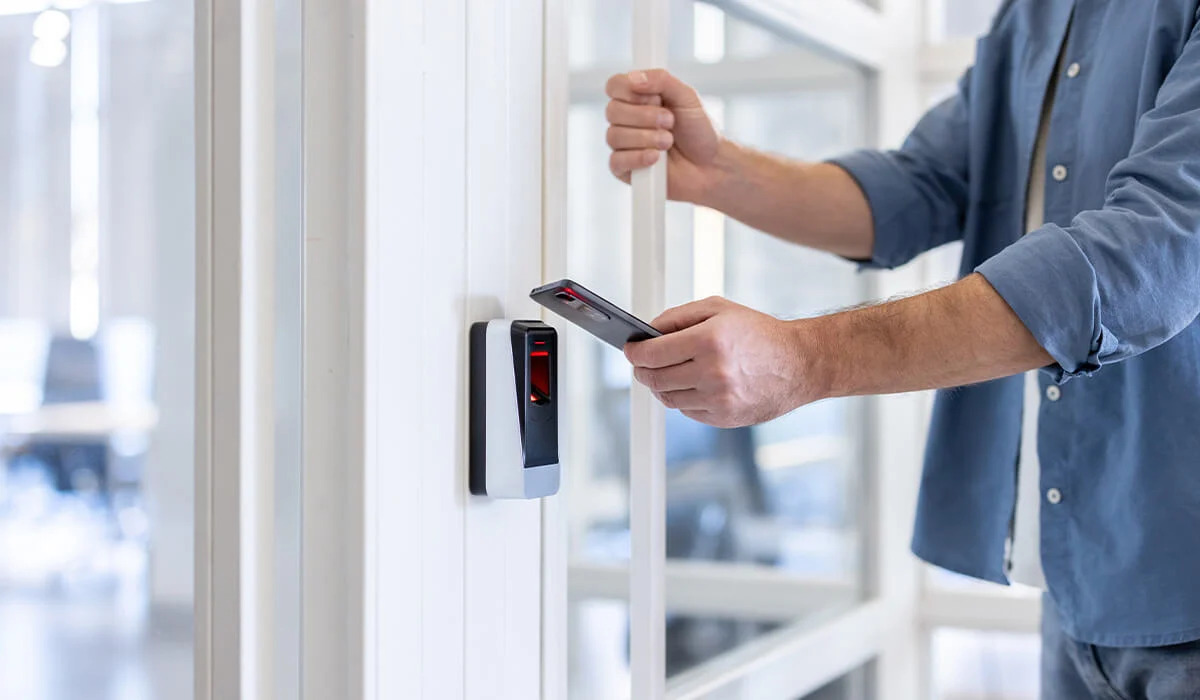
Building security has changed significantly over the years. Traditional locks and physical keys were once the primary methods of controlling entry into offices, warehouses, and commercial properties. However, as businesses expanded and security requirements became more complex, these conventional methods started showing limitations. Lost keys, unauthorized duplication, and difficulties managing employee access encouraged businesses to explore more reliable alternatives.
Today, door access control systems have evolved from basic electronic keycards to sophisticated mobile credential solutions. These technologies provide greater flexibility, improved security, and more convenient ways to manage building access. Understanding this evolution helps business owners make informed decisions about protecting their properties.
The Shift From Traditional Keys to Electronic Keycards
Traditional mechanical locks served businesses for decades, but managing physical keys became challenging as organizations grew. Every new employee required a key, and replacing locks after a security concern could become expensive and inconvenient.
Electronic keycard systems introduced a practical alternative. Instead of carrying traditional keys, employees could use programmed cards to unlock authorized doors. Administrators gained the ability to activate or deactivate individual credentials without replacing physical hardware.
Keycards also made it easier to manage different security levels within a building. For example, general employees could access common areas while managers received permission to enter restricted offices or storage rooms.
Although keycards improved access management, they introduced challenges of their own. Cards could be misplaced, damaged, shared, or stolen, creating a need for more flexible authentication methods.
The Introduction of Key Fobs and Smart Credentials
As electronic security technology advanced, businesses began adopting key fobs and smart credentials. These compact devices offered convenient alternatives to traditional access cards while supporting different authentication technologies.
Radio frequency identification technology allowed users to unlock compatible doors by presenting a credential near a reader. Certain smart card technologies also introduced stronger authentication capabilities than older proximity cards.
These improvements made daily entry more convenient, particularly in workplaces where employees frequently moved between departments or secured areas.
However, physical credentials still required distribution, replacement, and administrative management. Businesses increasingly wanted solutions that could simplify these responsibilities while maintaining reliable security.
Mobile Credentials and Smartphone-Based Access
The introduction of mobile credentials represents another important development in commercial security. Instead of relying entirely on physical cards or fobs, employees can use compatible smartphones to access authorized areas.
Mobile credentials commonly operate through Bluetooth Low Energy or Near Field Communication technology. Depending on the system, users can unlock doors by tapping their phones against a reader or bringing their devices within an approved range.
One significant advantage is remote credential management. Administrators can issue, modify, or revoke digital access permissions without physically distributing replacement cards. Businesses with several locations, transitory workers, or shifting work schedules may especially benefit from this flexibility.
Mobile access also reduces dependence on additional physical credentials, although businesses must consider device compatibility, battery availability, and appropriate security settings.
Cloud-Based Management and Centralized Security
Modern access control solutions increasingly incorporate cloud-based management platforms. These systems allow authorized administrators to manage doors, users, and access schedules through centralized software.
For businesses operating multiple facilities, centralized management can simplify everyday security responsibilities. Administrators can review access records, update permissions, and respond to staffing changes without manually configuring every entrance.
Certain platforms also integrate with video surveillance, visitor management, and alarm systems. These connections help security teams maintain better visibility over building activity and investigate unusual access attempts.
However, cloud connectivity also introduces considerations involving network reliability, cybersecurity, and data protection. Businesses should evaluate these factors before selecting a platform.
Choosing the Right Access Control Technology
Not every commercial property requires the same security arrangement. Small offices may benefit from straightforward keycard systems, while larger facilities might need mobile credentials, centralized management, and additional authentication measures.
When evaluating door access control systems, business owners should consider building size, employee movement, existing infrastructure, and future expansion requirements. Compatibility with current door hardware is equally important because upgrading older readers may require additional investment.
Security should remain the primary consideration. Strong credential authentication, appropriate user permissions, and reliable emergency exit arrangements are essential for maintaining a safe environment.
Conclusion
The evolution from traditional keys to electronic cards and mobile credentials reflects changing expectations surrounding workplace security. Businesses now have access to technologies that provide greater control over who enters their properties and when access is permitted.
While keycards remain practical for many environments, mobile credentials and centralized management offer additional convenience and flexibility. Choosing the right combination of technologies can help businesses strengthen security, simplify administration, and prepare their facilities for future requirements.